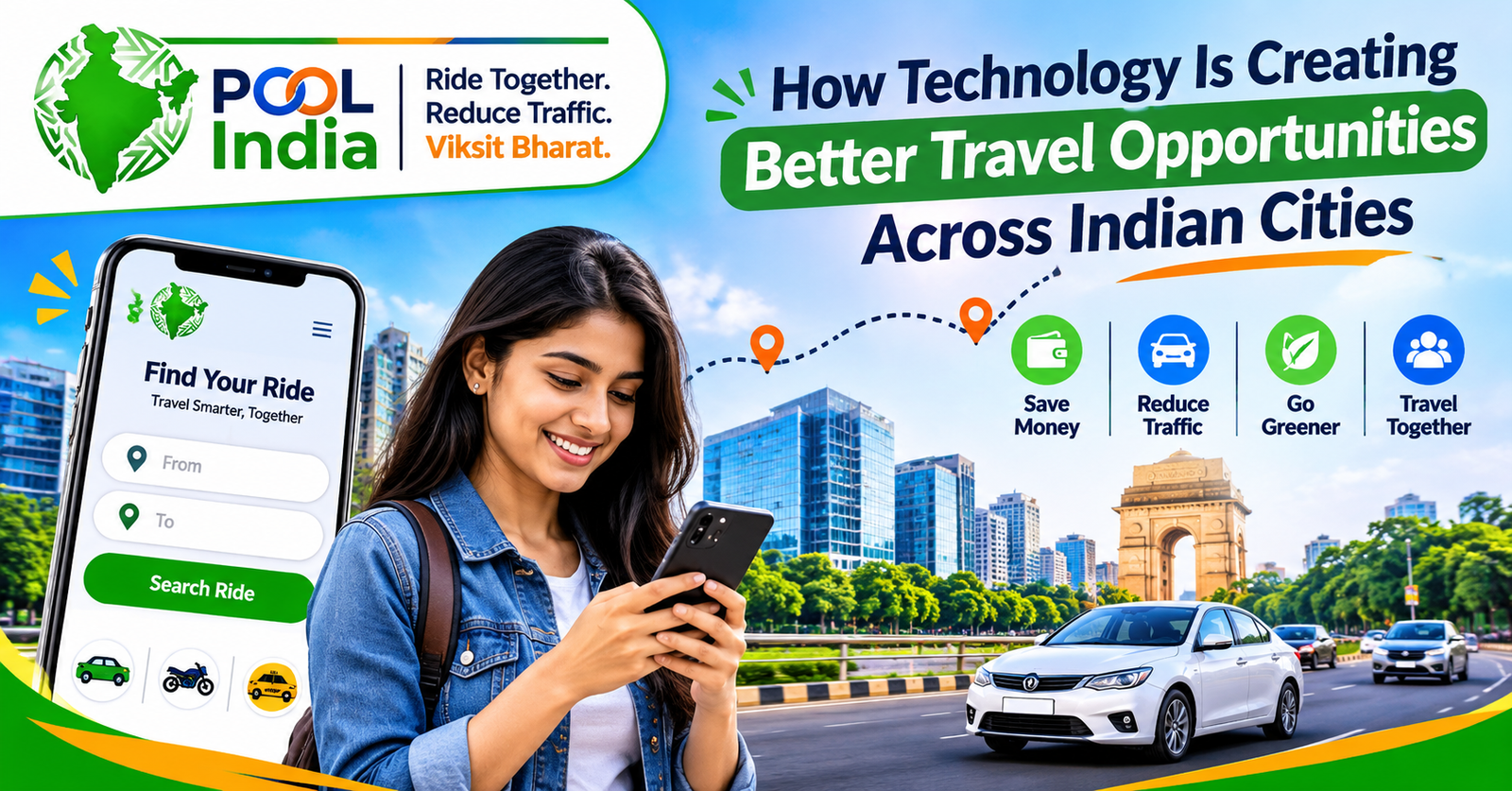
How Technology Is Creating Better Travel Opportunities Across Indian Cities
India’s cities are growing rapidly, and so is the need for convenient, affordable, and dependable transportation. Every day, students, professionals, families, and business travellers move between neighbourhoods, workplaces, railway stations, airports, and nearby cities. Traditional travel options do not always make these journeys simple or economical. This is where technology is opening new possibilities.
Today, digital platforms are helping people discover travel options, connect with other commuters, and plan journeys more efficiently. Smart mobility solutions in India are making transportation more connected by bringing different travel needs into a more accessible digital experience. Pool India is part of this changing mobility landscape, with services designed around shared journeys and everyday travel requirements.
1. Technology Is Making Travel More Connected
Earlier, finding people travelling in the same direction or coordinating a shared journey could take time and effort. Digital mobility platforms can make this process easier by helping users explore suitable travel options through one place.
With a technology-enabled platform, people can enter journey details, review available options, and make more informed travel decisions. This connected approach can be useful for daily commuters as well as people planning occasional trips.
For Indian cities, where traffic, distance, and busy schedules affect everyday life, better access to travel information can make a meaningful difference. Smart mobility solutions in India are not only about reaching a destination; they are also about making the journey easier to organise.
2. More Convenient Options for Everyday Commuting
Daily commuting is a major part of urban life. Many people travel along similar routes at similar times, whether they are going to offices, colleges, business districts, or other regular destinations.
Pool India brings together mobility options intended to support different travel requirements. Its GreenCar service is designed around shared car journeys, while Bike Buddy offers a two-wheeler travel option. These services give users different ways to explore a journey according to their needs.
The benefit of a digital approach is convenience. Instead of coordinating every detail separately, users can explore the platform and understand the options available for their travel plans. The right choice will depend on the route, timing, availability, and the user's preferences.
3. Digital Platforms Can Help Make Travel More Affordable
Travel expenses can add up, particularly for people who commute frequently or travel longer distances. Technology can help people discover options that may make a journey more economical.
Shared travel models allow eligible travellers going in a similar direction to coordinate a journey and share certain travel costs. For longer routes, Pool India's CabShare concept is designed to help travellers explore the possibility of sharing a cab journey.
This can create more flexibility when planning a trip. Rather than looking at every journey as a separate expense, travellers can consider whether a shared option suits their route and budget. Smart mobility solutions in India can support more informed decisions by making these choices easier to explore.
4. Better Connectivity for Intercity Journeys
Travel between cities is important for work, education, family visits, tourism, and business. However, arranging an intercity journey can involve comparing transport options, checking costs, and coordinating schedules.
Digital mobility platforms are helping reshape how people approach these journeys. Pool India's CabShare service focuses on connecting people who may be travelling in a similar direction and are interested in sharing a cab journey.
When a suitable option is available, this approach may help travellers coordinate plans and divide the fare. Availability, route compatibility, and the platform's applicable terms should always be checked before confirming a journey.
5. Supporting Corporate and Employee Transportation
Employee commuting is another important part of urban mobility. Companies with teams travelling from different areas may need practical ways to organise daily transportation and improve the commuting experience.
Technology-driven mobility services can help businesses explore more coordinated employee travel arrangements. A well-planned commute can make it easier for employees to consider suitable travel options and for organisations to think about transportation as part of their workplace planning.
Pool India also highlights corporate mobility as an area of focus. As businesses look for more organised commute options, digital platforms can play a useful role in connecting travel requirements with available services.
6. A More Sustainable Approach to Urban Mobility
The number of vehicles on city roads affects congestion, fuel consumption, and the overall travel environment. When people can coordinate journeys and make better use of available seats, shared travel may help reduce the need for separate vehicles on some routes.
Technology cannot solve every transportation challenge on its own, but it can make shared mobility easier to discover and organise. This is one reason smart mobility solutions in India are becoming an important part of conversations about the future of urban transportation.
By encouraging people to consider suitable shared journeys, platforms such as Pool India support a more connected approach to mobility. The actual environmental benefit depends on factors such as route, vehicle use, occupancy, and whether a shared journey replaces separate trips.
7. One Platform for Different Travel Needs
Different journeys require different solutions. A short city commute, a two-wheeler journey, an intercity trip, and a regular employee commute may not all need the same type of transportation.
Pool India's mobility ecosystem brings together concepts such as GreenCar, Bike Buddy, and CabShare. Its website also presents Premium Shuttle as a service in development. This range reflects the idea that travel platforms can support more than one kind of journey.
For users, the important step is to review the service details, check availability for their route, and choose an option that fits their requirements. A digital platform is most useful when it makes relevant travel choices easier to understand.
The Future of Travel Is Connected
Technology is changing how people discover, plan, and coordinate transportation across Indian cities. From everyday commuting to intercity journeys and corporate travel, digital mobility platforms are creating new ways to think about convenience, affordability, and connectivity.
Pool India is contributing to this evolving space through a range of mobility services designed for different travel needs. As cities continue to grow, smart mobility solutions in India can help people explore more organised ways to travel and make better use of available transportation options.
The future of urban travel will depend on accessible technology, reliable services, thoughtful planning, and informed choices. With the right approach, every journey can become easier to plan and better connected.
Conclusion: Technology is opening new possibilities for transportation across India. With connected services and different mobility options, Pool India aims to make everyday and intercity travel more convenient, accessible, and efficient.