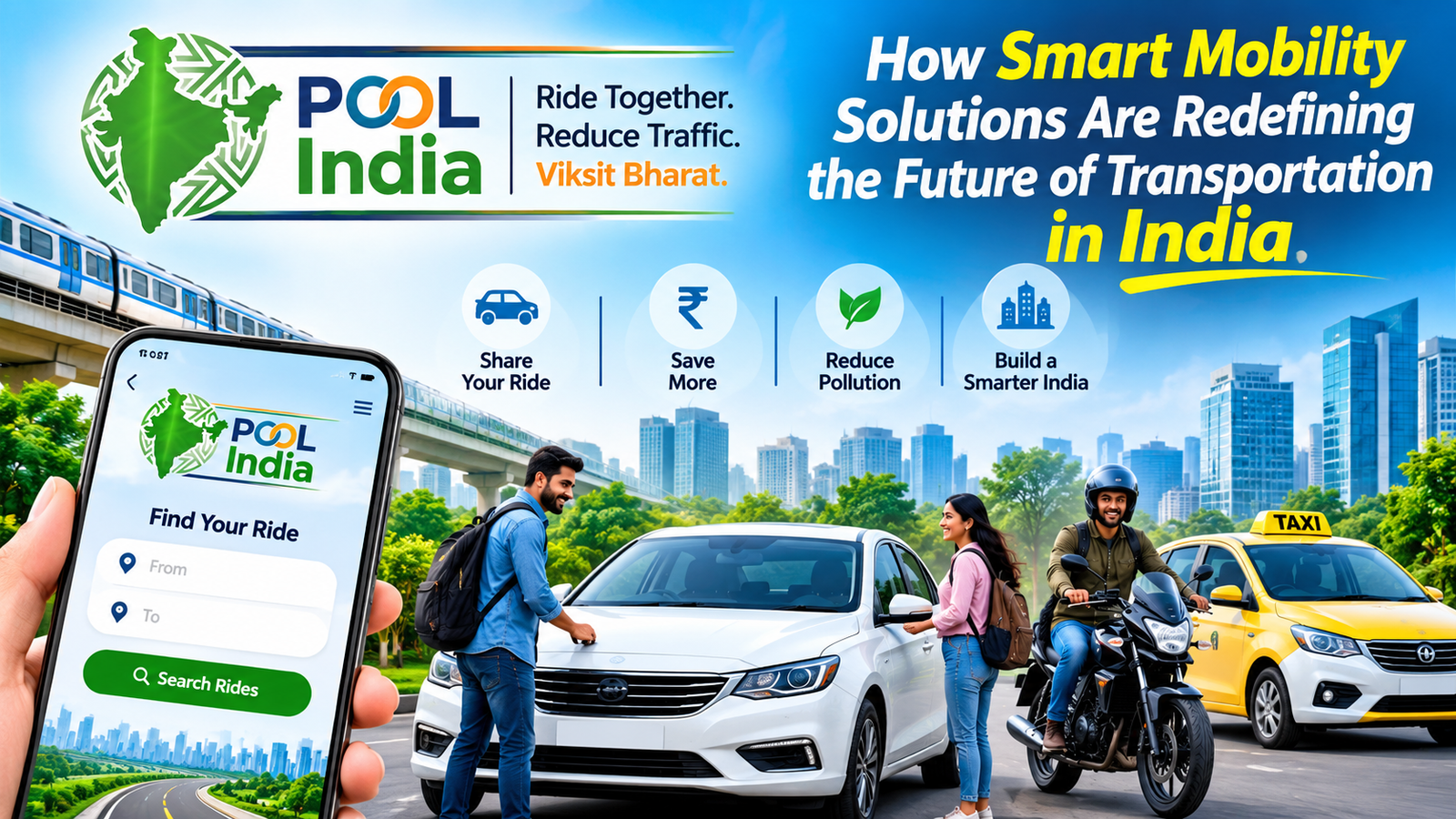
How Smart Mobility Solutions Are Redefining the Future of Transportation in India
Transportation is an essential part of everyday life. Whether people travel to offices, colleges, business meetings, or different cities, getting from one destination to another has become a regular necessity. However, India's rapidly growing urban population has also created several transportation challenges, including traffic congestion, rising fuel expenses, parking difficulties, and increasing environmental concerns.
As cities continue to expand, traditional transportation methods alone may not be enough to meet the changing needs of modern commuters. People are now looking for travel options that are convenient, affordable, flexible, and environmentally responsible.
This is where smart mobility solutions are becoming increasingly important. By combining digital technology, connected transportation services, and shared travel options, modern mobility platforms are changing how people plan and experience their journeys.
Pool India is working toward this transformation by bringing multiple transportation services together under one digital platform. With solutions such as Bike Buddy, CabShare, and its planned Premium Shuttle service, the platform aims to make everyday transportation more connected, accessible, and efficient.
Let's explore how smart mobility is redefining transportation in India and why connected travel platforms are becoming important for the future.
1. Understanding Smart Mobility Solutions
Smart mobility refers to the use of technology and innovative transportation methods to improve how people travel. It focuses on making transportation more efficient by connecting commuters with suitable travel options.
Instead of depending entirely on individual vehicles, people can explore different ways to reach their destinations through connected mobility platforms.
Some important elements of modern mobility include:
Digital platforms for discovering travel options.
Shared transportation services.
Better utilization of available vehicle capacity.
Convenient ride-search and booking experiences.
Connected travel networks.
More cost-conscious commuting choices.
Environmentally responsible transportation.
These developments are helping create a new transportation environment where convenience, affordability, and connectivity work together.
2. Why India Needs Smarter Transportation Options
India's cities are growing rapidly, and so is the demand for everyday transportation. Millions of people travel regularly for employment, education, shopping, and personal requirements.
However, increasing travel demand also creates challenges.
Rising Traffic Congestion
Busy roads and peak-hour traffic can make even short journeys time-consuming. When several people travel independently along similar routes, the number of vehicles on the road can increase unnecessarily.
Increasing Travel Expenses
Fuel, parking, maintenance, and cab fares contribute to everyday transportation expenses. Regular commuters often look for practical ways to manage these costs.
Parking Difficulties
Finding parking in crowded commercial areas, office districts, and residential locations can be challenging.
Environmental Concerns
A high number of individual vehicle journeys contributes to fuel consumption and transportation-related emissions. Better use of existing travel capacity can help support more responsible mobility practices.
These challenges highlight why India needs practical and technology-driven transportation alternatives.
3. How Digital Mobility Platforms Are Changing Travel
Technology has transformed the way people communicate, shop, work, and manage everyday activities. Transportation is also becoming increasingly digital.
Modern mobility platforms help users explore suitable travel options without depending entirely on traditional arrangements.
Through a connected platform, commuters can search for journeys, check available options, and make travel decisions according to their requirements.
The growth of smart mobility solutions is creating opportunities for more organized transportation experiences.
For example, someone travelling to an office may prefer a shared car journey, while another person travelling a shorter distance may find a two-wheeler option more suitable.
Similarly, people travelling between cities may prefer sharing a cab journey with others heading in the same direction.
This flexibility is one of the important advantages of a multi-service mobility ecosystem.
4. Pool India: Bringing Multiple Mobility Services Together
Pool India is developing a connected mobility ecosystem designed to support different travel requirements through one platform.
Instead of focusing on only one transportation option, it brings together multiple services that address different commuting needs.
Bike Buddy
Two-wheelers play an important role in everyday transportation across Indian cities.
Bike Buddy is designed to connect riders and passengers for suitable bike-based journeys.
It provides another option within the Pool India mobility ecosystem, particularly for people looking for flexible city travel.
CabShare
Long-distance and intercity cab journeys can become expensive when one traveller has to bear the entire fare.
CabShare introduces a shared approach to cab travel by helping connect people heading in similar directions.
By sharing a suitable journey and dividing applicable travel expenses, commuters can explore a more cost-conscious way to travel between destinations.
Premium Shuttle
Pool India's Premium Shuttle service is planned as another transportation option for regular commuters.
The concept focuses on comfortable AC shuttle travel along selected routes, with a structured commuting experience.
The service is currently presented as coming soon on the website.
Together, these services demonstrate how a connected mobility platform can address different transportation requirements.
5. Making Everyday Travel More Affordable
Transportation expenses can become a significant part of a person's monthly budget.
Daily fuel purchases, parking charges, vehicle maintenance, and occasional cab bookings can add up over time.
Shared travel options provide an alternative approach to managing these expenses.
For example, when people travelling in similar directions share an eligible journey, they can divide applicable travel costs instead of paying separately for multiple vehicles.
This makes affordability an important part of modern mobility.
Pool India's approach focuses on providing different shared travel options through one platform, helping commuters explore choices that match their routes and requirements.
The goal is not simply to reach a destination but to make the overall travel experience more economical and convenient.
6. Supporting Sustainable Transportation in Indian Cities
Environmental responsibility is becoming an important consideration in transportation planning.
When multiple people use separate vehicles for similar journeys, available transportation capacity may not be utilized effectively.
Shared mobility encourages people to explore opportunities to travel together.
This can potentially reduce the number of individual vehicle trips when journeys are successfully combined.
The benefits may include:
Better utilization of available vehicle seats.
Reduced demand for separate vehicle journeys.
Opportunities to lower fuel consumption.
Potential reductions in transportation-related emissions.
Greater awareness of responsible travel choices.
Through its shared mobility ecosystem, Pool India aims to contribute to a transportation culture that considers both commuter convenience and environmental impact.
7. The Importance of Smart Mobility for Corporate Transportation
Employee transportation is another area where modern mobility platforms can make a difference.
Many employees travel between residential areas and office locations every working day. In large cities, these journeys can create traffic congestion and increase commuting expenses.
Organizations are therefore exploring more efficient ways to manage employee transportation.
Corporate mobility solutions can help businesses:
Organize employee commuting options.
Explore shared travel arrangements.
Reduce dependence on separate individual journeys.
Support more convenient employee transportation.
Encourage sustainable commuting practices.
Contribute to workplace sustainability initiatives.
Pool India also highlights enterprise and corporate transportation partnerships as part of its mobility offering.
This creates opportunities for organizations to explore connected commuting options while supporting a more responsible approach to everyday travel.
8. How Smart Mobility Solutions Can Improve the Future of Indian Cities
The future of transportation will depend on how effectively cities manage increasing travel requirements.
Technology, connectivity, and better utilization of existing transportation resources can all play important roles.
Here are some ways smart mobility solutions can support this transformation.
Better Travel Connectivity
Connected platforms can help people discover transportation options according to their destinations and travel requirements.
More Flexible Commuting
Different travel services can support different types of journeys, from short city trips to longer intercity travel.
Improved Cost Management
Shared transportation can create opportunities to divide applicable travel expenses.
Better Resource Utilization
Making use of available vehicle seats can help reduce unnecessary duplication of journeys.
A More Connected Community
Shared journeys can connect people travelling along similar routes and encourage a more collaborative commuting culture.
As these ideas become more familiar, connected mobility platforms may become an increasingly important part of India's transportation ecosystem.
9. Why Pool India Represents a New Approach to Everyday Mobility
Pool India's approach focuses on bringing multiple shared transportation options into one digital ecosystem.
Its services address different requirements rather than limiting users to a single type of journey.
Whether someone is looking for a regular car commute, a bike-based travel option, an intercity shared cab, or a planned shuttle service, the platform aims to provide a connected place to explore these mobility choices.
Its philosophy is captured in the message:
Ride Together. Reduce Traffic. Viksit Bharat.
This vision connects everyday transportation with broader goals such as better connectivity, affordability, efficient resource utilization, and sustainable development.
By encouraging people to explore shared travel opportunities, Pool India aims to contribute to a smarter transportation experience for modern India.
10. What Does the Future of Smart Transportation Look Like?
The transportation industry is continuously evolving.
In the coming years, commuters are likely to expect more convenient digital experiences, flexible travel choices, better connectivity, and cost-conscious transportation services.
Mobility platforms that combine different travel options may become increasingly relevant as people look for alternatives suited to their individual needs.
The future of transportation will not depend on technology alone. It will also depend on how effectively people, vehicles, and mobility networks work together.
This is why smart mobility solutions have an important role to play in India's changing transportation landscape.
Pool India is working toward this future by bringing different shared mobility services together and encouraging people to make more thoughtful travel choices.
Conclusion
India's transportation needs are changing, and modern commuters are looking for better ways to travel.
Rising traffic congestion, increasing travel expenses, parking difficulties, and environmental concerns have created a need for more connected and efficient transportation options.
Smart mobility solutions offer an opportunity to address these challenges through technology, shared transportation, and flexible mobility services.
With Bike Buddy, CabShare, and its planned Premium Shuttle service, Pool India is building a broader mobility ecosystem designed around the changing requirements of Indian commuters.
The future of transportation is not only about reaching a destination. It is also about making every journey more convenient, affordable, connected, and responsible.