How Shared Mobility Is Transforming Everyday Travel for Indian Commuters
India’s cities are growing rapidly, and with this growth comes a major challenge — daily urban travel. Increasing traffic, longer commute times, rising transportation expenses and crowded roads have made everyday commuting more difficult for millions of people.
Every morning, thousands of commuters travel through the same routes to reach offices, colleges, business centres and other destinations. Yet, many vehicles on the road continue to have unused seats.
This is where shared mobility in India can create a smarter approach to everyday transportation.
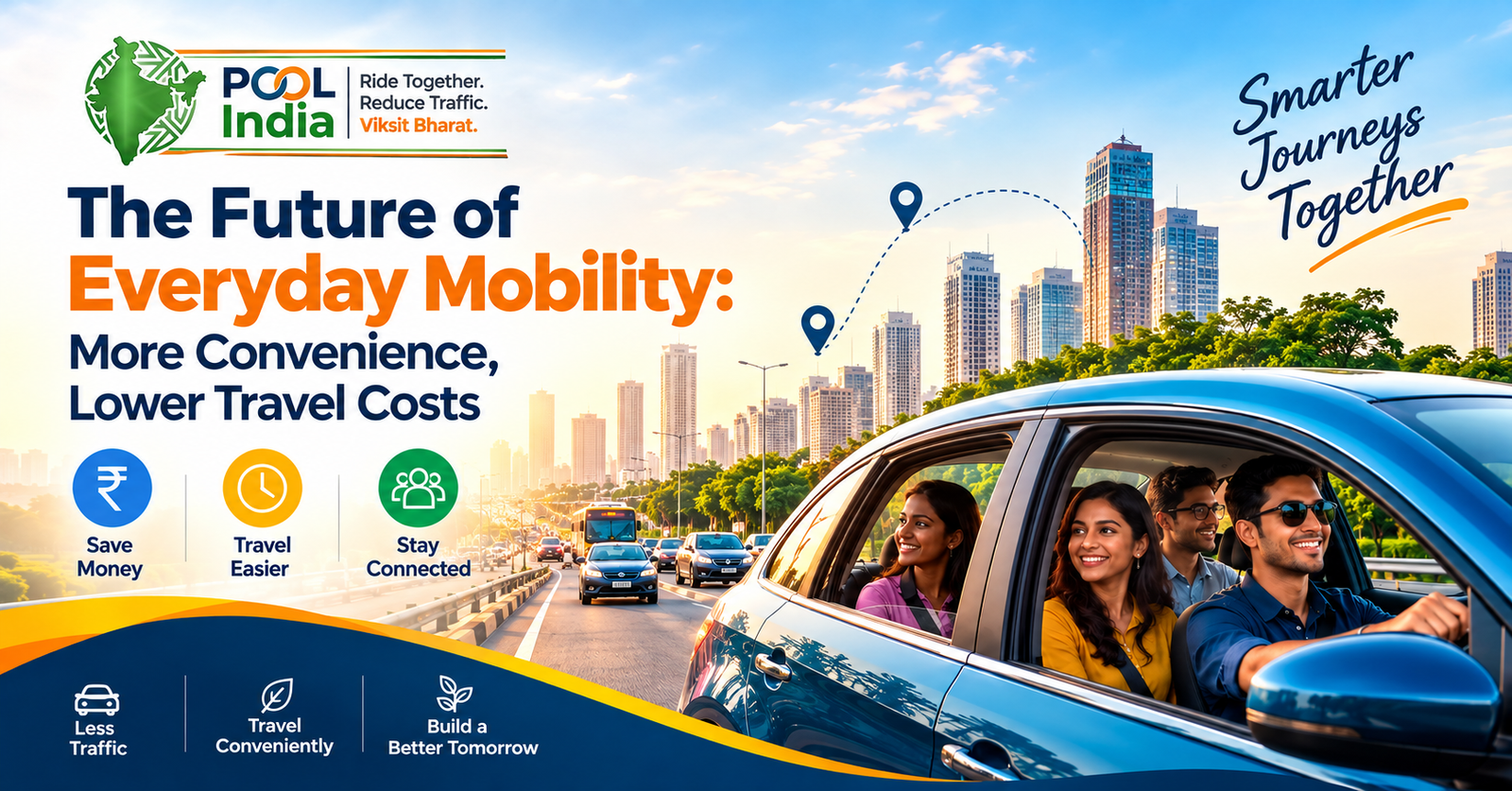
Pool India is built around the idea of connecting people travelling in similar directions and making everyday journeys more connected, convenient and cost-conscious.
What Is Shared Mobility?
Shared mobility refers to transportation where people share vehicles, journeys or available travel capacity instead of travelling completely independently.
The concept is simple:
Similar Destination + Similar Route + Shared Journey = Smarter Mobility
Instead of multiple people travelling separately along the same route, technology can help commuters discover suitable opportunities to travel together.
This approach can make everyday transportation more efficient while creating a more connected commuting experience.
The Changing Reality of Everyday Travel in India
For many Indian commuters, travelling to work or other regular destinations has become a daily challenge.
Peak-hour roads can experience:
- Heavy traffic
- Long waiting times
- Increasing travel expenses
- Stressful commutes
- Crowded roads
- Underutilized vehicle capacity
The problem isn't always the lack of vehicles.
In many cases, the challenge is how efficiently existing vehicles and available seats are being utilized.
This is one of the areas where shared mobility solutions can provide a different approach.
How Pool India Can Make Everyday Travel Smarter
Pool India focuses on connecting commuters and enabling shared travel through a technology-driven mobility platform.
The idea is not complicated.
If two or more people are travelling in a similar direction, they may be able to share the journey instead of travelling separately.
This creates opportunities for:
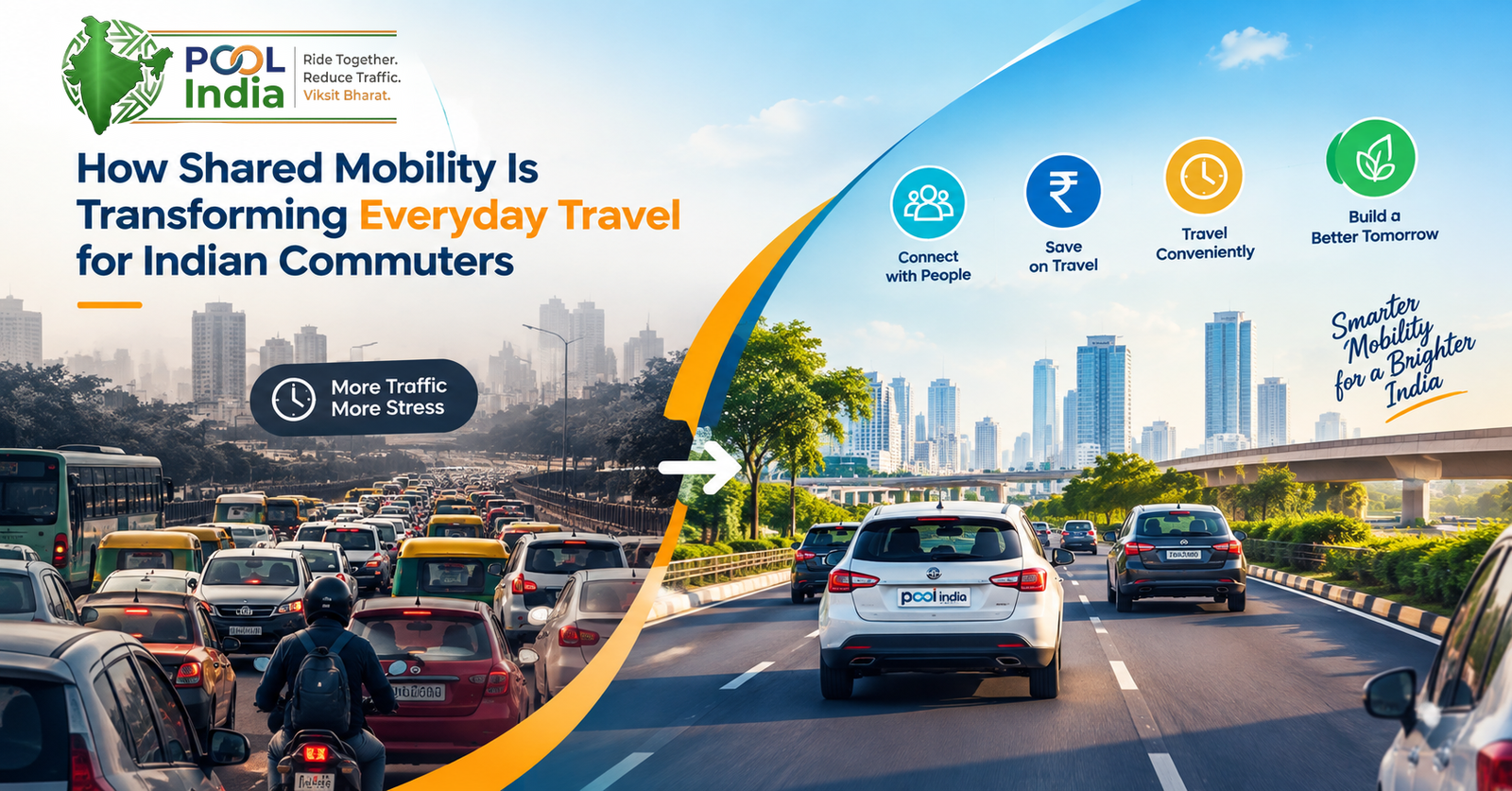
Connect with People
Commuters can discover people travelling along similar routes and connect around their daily travel requirements.
Save on Travel
Sharing a journey can provide opportunities to distribute travel expenses among suitable participants, potentially making regular commuting more affordable.
Travel Conveniently
Instead of arranging transportation separately every day, commuters can explore available shared travel options through a connected platform.
Build a Better Tomorrow
Better utilization of existing vehicle capacity can support a more sustainable approach to urban transportation.
Shared Mobility Can Help Address Traffic Challenges
Traffic congestion is one of the most visible challenges of urban transportation.
Imagine a road where several people are travelling toward the same destination.
If everyone travels separately, the road carries multiple individual vehicles.
But when suitable commuters share available vehicle capacity, the same group of people can potentially travel using fewer vehicles.
This is the basic principle behind shared mobility.
It doesn't mean traffic disappears overnight. Rather, it encourages a change in how people think about everyday transportation.
Travel together. Use available capacity better. Move smarter.
Making Daily Commuting More Affordable
Transportation expenses are an important consideration for regular commuters.
Fuel, parking, vehicle maintenance and other travel-related expenses can contribute significantly to the cost of daily commuting.
For people travelling regularly along similar routes, shared travel can provide an opportunity to distribute certain journey costs.
Pool India's mobility approach brings commuters together around this idea.
The objective is to create a transportation ecosystem where people can explore more affordable commuting options while staying connected with their regular travel routes.
From Individual Travel to Connected Mobility
Traditional commuting often looks like this:
Home → Individual Vehicle → Traffic → Destination
Shared mobility introduces another possibility:
Home → Connect → Share Journey → Destination
Technology makes this connection easier.
A digital mobility platform can help people discover relevant travel possibilities based on their routes and requirements.
This is why the future of urban mobility in India is increasingly connected with digital platforms, shared transportation and smarter utilization of existing resources.
Shared Mobility and a Better Urban Future
The benefits of shared mobility aren't limited to individual commuters.
A more efficient transportation ecosystem can also contribute to broader urban goals.
Better Vehicle Utilization
Available seats in vehicles can potentially be used more efficiently.
Fewer Unnecessary Journeys
When suitable commuters share journeys, some individual trips may be consolidated.
More Connected Communities
Shared travel can bring people travelling along similar routes together.
Sustainable Transportation Mindset
Shared mobility encourages people to think beyond individual transportation and consider more resource-efficient travel options.
Why Shared Mobility Matters for Indian Cities
India has a diverse and rapidly developing urban transportation environment.
Large cities have extensive road networks, public transportation systems, private vehicles, two-wheelers, taxis and other mobility options.
Shared mobility can complement this ecosystem by providing another way for commuters to organize everyday travel.
The future of smart mobility in India isn't necessarily about replacing every existing transportation option.
It is about creating more choices.
People should be able to choose transportation based on their route, time, budget and convenience.
Pool India aims to become part of this evolving mobility ecosystem.
The Role of Technology in Modern Commuting
Technology has changed almost every part of our daily lives, and transportation is no exception.
Today, commuters expect digital platforms to make everyday activities easier.
A technology-driven shared mobility platform can help bring together:
Commuters + Routes + Vehicles + Travel Requirements
This creates a more connected mobility experience.
Instead of relying completely on manual coordination, commuters can use technology to discover and manage shared travel possibilities.
A Smarter Way to Think About Everyday Travel
The biggest change shared mobility brings is not simply the ability to share a ride.
It is a change in mindset.
Instead of asking:
“How will I travel today?”
Commuters can also ask:
“Who else is travelling in the same direction?”
That small change can open the door to new possibilities for affordable, connected and smarter urban mobility.
Pool India: Moving Towards Smarter Mobility
Pool India is built around a simple vision:
Ride Together. Reduce Traffic. Viksit Bharat.
The platform focuses on connecting people and enabling shared travel possibilities for everyday commuters.
Through a technology-enabled approach, Pool India aims to make urban transportation more connected, convenient and accessible.
As cities continue to grow, solutions based on shared mobility in India can become an important part of the conversation around smarter urban transportation.
The Future of Urban Mobility Is Shared
The future of transportation isn't only about building more roads or adding more vehicles.
It is also about making better use of the transportation resources that already exist.
When people travelling in similar directions can connect, available vehicle capacity can potentially be used more efficiently.
When journeys are shared, commuters can explore more cost-conscious travel options.
And when technology connects people with mobility opportunities, everyday transportation can become more organized and connected.
This is the vision behind Pool India.
Conclusion
Shared mobility in India represents a new way of thinking about everyday transportation.
For commuters, it can create opportunities for more affordable and connected journeys.
For cities, it can encourage better utilization of available vehicle capacity.
For the future, it can support a more sustainable approach to urban transportation.
Pool India brings these ideas together through a technology-driven shared mobility platform designed around the needs of modern Indian commuters.
The journey toward smarter urban mobility can begin with something very simple:
If we're going in the same direction, why not travel together?
Pool India — Ride Together. Reduce Traffic. Viksit Bharat.