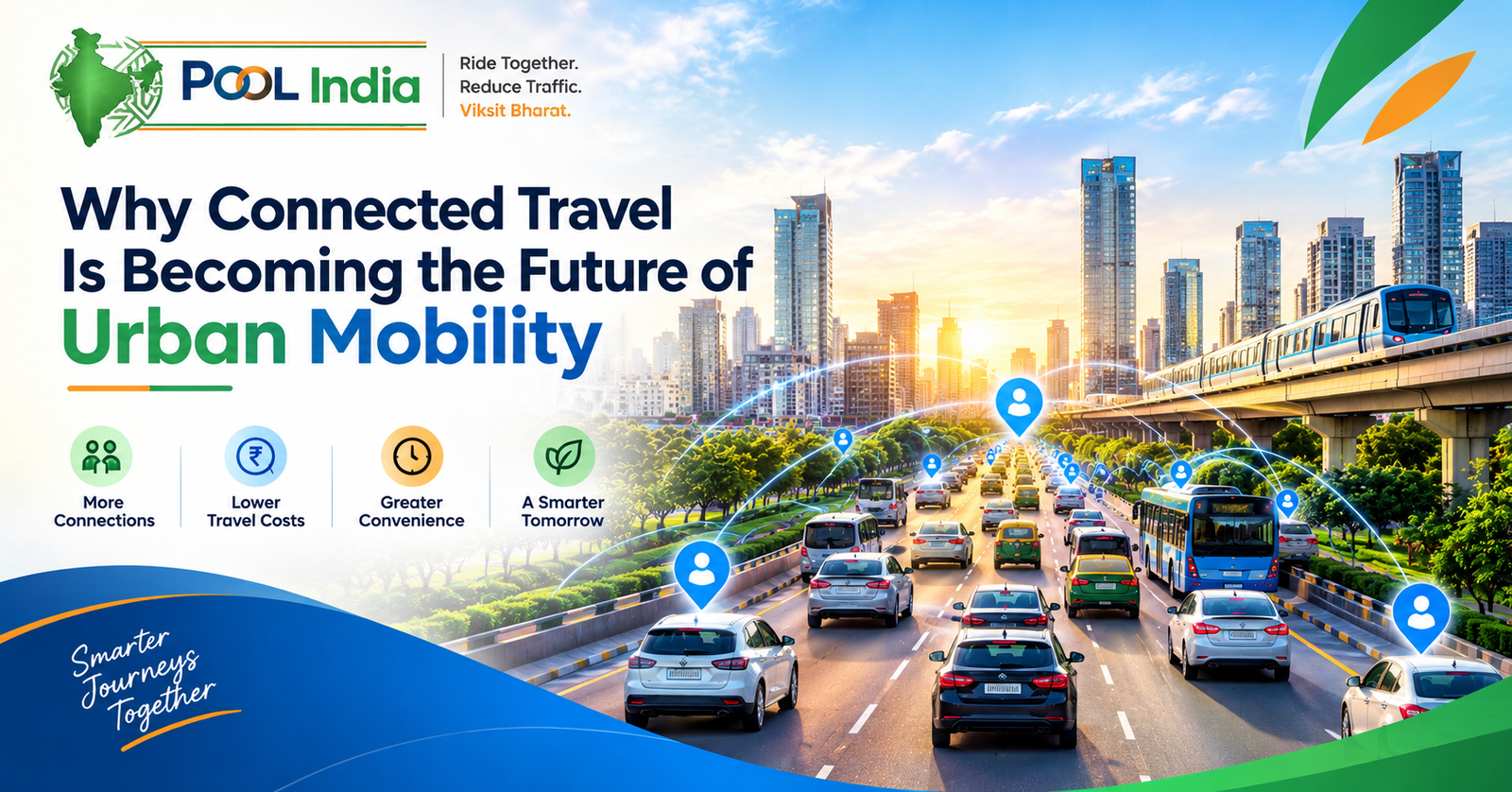
Why Connected Travel Is Becoming the Future of Urban Mobility
Urban travel is changing rapidly as cities grow, roads become busier, and daily commuting becomes more challenging. People want transportation options that are convenient, affordable, reliable, and better suited to their everyday needs. Traditional travel habits are no longer the only answer to these challenges. Technology and smarter mobility solutions are creating new ways for people to plan journeys and connect with others travelling in the same direction.
This is where connected travel is becoming increasingly important. It focuses on making transportation more coordinated by connecting travellers, routes, and mobility options through smarter systems. For people travelling to offices, colleges, business meetings, and other destinations, this approach can help make everyday journeys more efficient.
Pool India aims to contribute to this changing mobility landscape by bringing people closer to smarter travel possibilities. With its focus on connected mobility, the platform represents a modern approach to making everyday transportation more convenient and accessible.
What Is Connected Travel?
Connected travel refers to a smarter approach to transportation in which people, journeys, and mobility services are better connected. Instead of treating every journey as a completely separate activity, connected mobility encourages coordination, accessibility, and more efficient use of available transportation options.
For example, people travelling along similar routes may be able to discover suitable travel arrangements instead of planning every journey independently. Technology can make it easier to find relevant options, understand routes, and organise travel according to individual requirements.
The concept is not limited to one type of transportation. It represents a broader shift towards a more connected travel experience that puts convenience, affordability, and accessibility at the centre of urban mobility.
For Pool India, this approach aligns with the idea of helping people discover smarter ways to travel while supporting a more connected transportation ecosystem.
Why Urban Mobility Needs a Smarter Approach
Growing cities face several transportation challenges. Increasing travel demand, crowded roads, rising commuting expenses, and time-consuming journeys affect the daily lives of commuters.
Many people travel to the same business districts, office locations, educational institutions, and commercial areas every day. However, their travel arrangements are often planned independently, even when their destinations or routes are similar.
A smarter mobility approach can help address these challenges by improving how people discover and coordinate their journeys.
Connected travel offers several potential advantages:
Better travel coordination: People can explore suitable travel options based on their routes and requirements.
Greater convenience: Technology can simplify the process of discovering and organising journeys.
Potential cost savings: Suitable shared travel arrangements may help participants divide eligible travel expenses.
More efficient transportation: Better coordination can support more effective use of available vehicle capacity.
A better commuter experience: Accessible mobility solutions can give people additional choices for everyday travel.
These benefits explain why connected mobility is becoming an important part of conversations about the future of urban transportation.
How Pool India Supports the Future of Connected Mobility
Pool India is focused on creating a more connected travel experience by bringing different mobility possibilities together. Its platform is designed around the idea that transportation can become more convenient when people have better ways to explore suitable travel options.
Rather than looking at mobility as simply getting from one location to another, the connected travel approach considers the complete journey, including convenience, accessibility, affordability, and coordination.
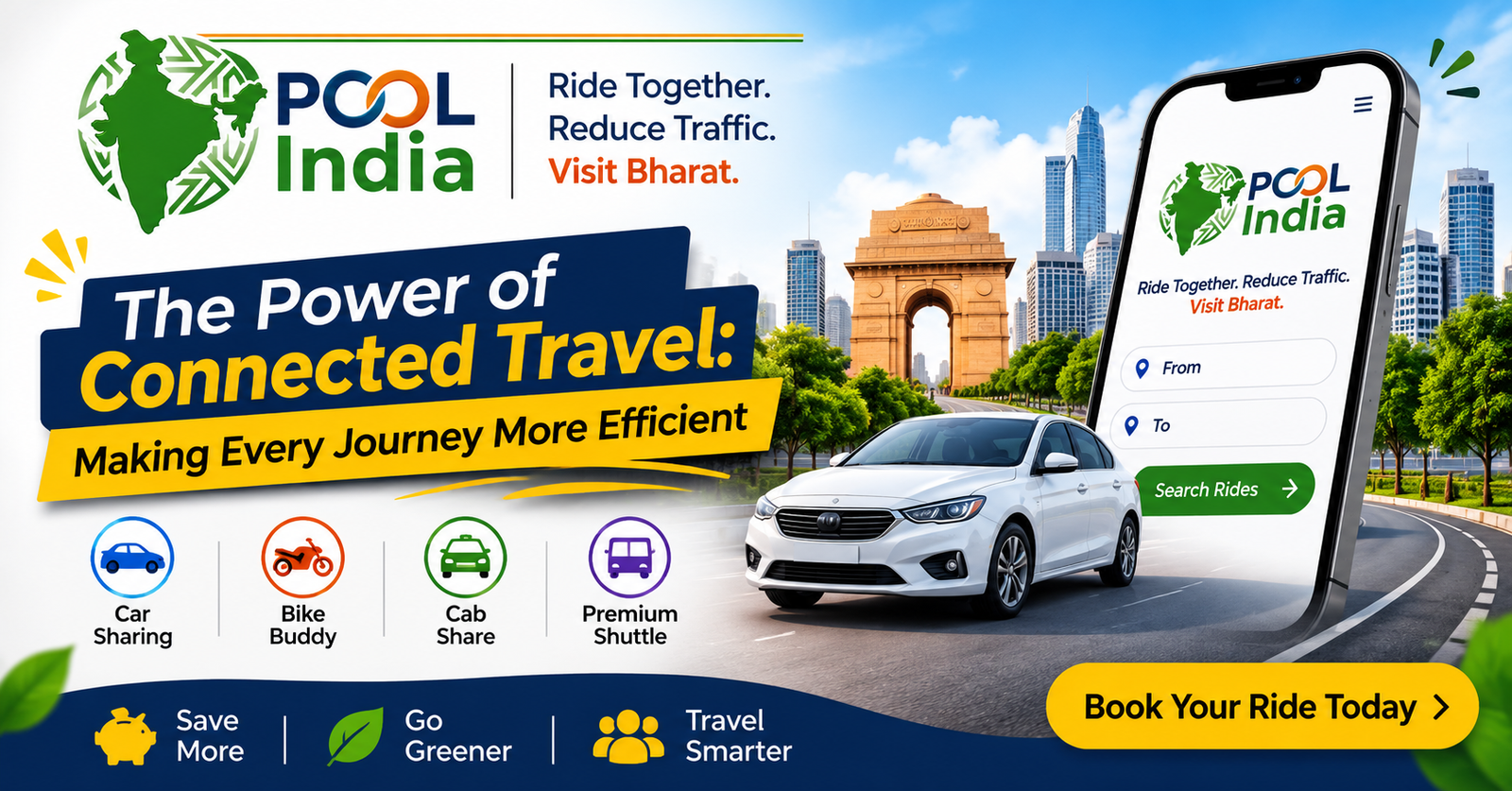
Pool India brings together mobility concepts such as GreenCar Carpool, Bike Buddy, and CabShare, with Premium Shuttle also presented as a planned service on its website. These offerings address different travel situations, from everyday journeys to other trips where coordinated transportation may be useful.
By bringing these mobility options under one platform, Pool India aims to make it easier for people to explore travel possibilities that suit their needs.
As cities continue to evolve, platforms that focus on connected mobility can play a valuable role in helping commuters understand and access alternative transportation arrangements.
5 Ways Connected Travel Can Improve Everyday Commuting
1. Making Daily Journeys More Convenient
Daily commuting can require considerable planning, especially for people travelling during busy hours. Finding suitable transportation and organising a journey can add unnecessary complexity to an already demanding day.
Connected travel encourages a more organised approach by helping people explore relevant travel possibilities. For commuters, having additional options can make journey planning more flexible.
Pool India supports this broader objective by focusing on mobility solutions designed around different travel requirements.
2. Helping Commuters Manage Travel Expenses
Transportation costs are an important consideration for employees, students, and frequent travellers. Regular fuel expenses, fares, and other journey-related costs can add up over time.
When a suitable shared travel arrangement is available, participants may be able to divide eligible journey expenses according to the arrangement. This can make certain trips more economical than travelling independently.
Pool India’s focus on accessible mobility options connects with the growing demand for travel solutions that consider both convenience and affordability.
3. Improving the Use of Available Transportation
In busy urban areas, vehicles may travel along similar routes while available passenger capacity remains unused. Better coordination between travellers can create opportunities to use existing transportation more efficiently.
Connected mobility encourages people to explore suitable arrangements based on their destinations and travel requirements. Although results depend on actual participation and route compatibility, improved coordination can contribute to more efficient journeys.
This is an important consideration for cities looking for practical ways to manage increasing transportation demand.
4. Supporting More Informed Travel Choices
Different journeys require different solutions. A daily office commute may have different requirements from an occasional intercity journey or a trip within a busy city.
Connected travel recognises the importance of offering choices rather than assuming that one transportation option suits everyone.
Pool India’s mobility-focused approach brings multiple travel concepts together, allowing users to explore options according to their needs and availability.
5. Contributing to More Sustainable Urban Mobility
Transportation choices can influence fuel consumption, road congestion, and vehicle emissions. When suitable shared journeys reduce the number of separate vehicle trips, they may help reduce some of these impacts.
The actual environmental benefit depends on factors such as vehicle occupancy, route distance, and whether a shared journey replaces a separate trip.
By encouraging better coordination and more efficient use of transportation, connected mobility can support broader efforts towards more sustainable urban travel.
The Role of Technology in Connected Travel
Technology is an important part of modern mobility because it can help people discover, organise, and manage transportation options more efficiently.
Digital platforms can make it easier to explore relevant travel arrangements, compare available possibilities, and coordinate journeys. When information is accessible and the user experience is straightforward, commuters can make more informed decisions about how they travel.
However, technology alone cannot solve every transportation challenge. Useful mobility solutions also depend on availability, appropriate routes, user participation, safety considerations, and reliable service information.
Pool India is part of this broader shift towards technology-enabled mobility. Its focus on bringing different travel possibilities together reflects the increasing importance of convenient and connected transportation experiences.
Why Pool India Matters for India's Changing Travel Needs
India's cities have diverse transportation requirements. Office employees, students, business travellers, and other commuters often need solutions that balance time, cost, convenience, and accessibility.
As urban areas expand, the demand for flexible mobility options is likely to remain an important consideration. People increasingly benefit from having different ways to approach their journeys rather than depending on a single travel arrangement.
Pool India aligns with this changing landscape by focusing on connected mobility and multiple travel concepts. Its approach highlights how better coordination and accessible travel options can contribute to a more organised commuting experience.
For businesses, coordinated employee transportation may also be worth exploring as part of broader commuting and mobility planning. The suitability of any solution depends on employee routes, schedules, service availability, and organisational requirements.
The future of urban mobility will require a combination of technology, thoughtful planning, and practical transportation choices. Platforms that help connect people with relevant travel possibilities can contribute to this development.
What Does the Future Hold for Connected Travel?
The future of urban transportation will depend on how effectively cities, commuters, businesses, and mobility platforms respond to changing travel needs.
Connected travel is likely to remain relevant as people seek greater convenience, better journey coordination, and more affordable transportation choices. Digital tools and mobility platforms can help make travel options easier to discover, while more efficient use of existing transportation may support broader urban mobility goals.
For this progress to be meaningful, solutions must remain practical, accessible, and responsive to real commuter needs. Safety, transparency, service reliability, and user experience will continue to matter.
Pool India has an opportunity to contribute to this evolving landscape by helping people explore connected mobility options for different journeys. As awareness grows, the emphasis on smarter transportation can encourage people to think more carefully about how they travel.
Conclusion
Connected travel represents a shift towards a more coordinated and convenient approach to urban transportation. By helping people explore suitable travel options, it can support better journey planning, potential cost savings, and more efficient use of available mobility resources.
For commuters facing busy roads and increasing travel demands, having access to different transportation possibilities can make a meaningful difference to their daily routines.
Pool India reflects this modern approach by bringing multiple mobility concepts together under a connected platform. As India's cities continue to grow, smarter mobility solutions can become an important part of creating a more accessible and efficient travel experience.
The future of urban mobility is about more than reaching a destination. It is about making the journey smarter, more convenient, and better connected.